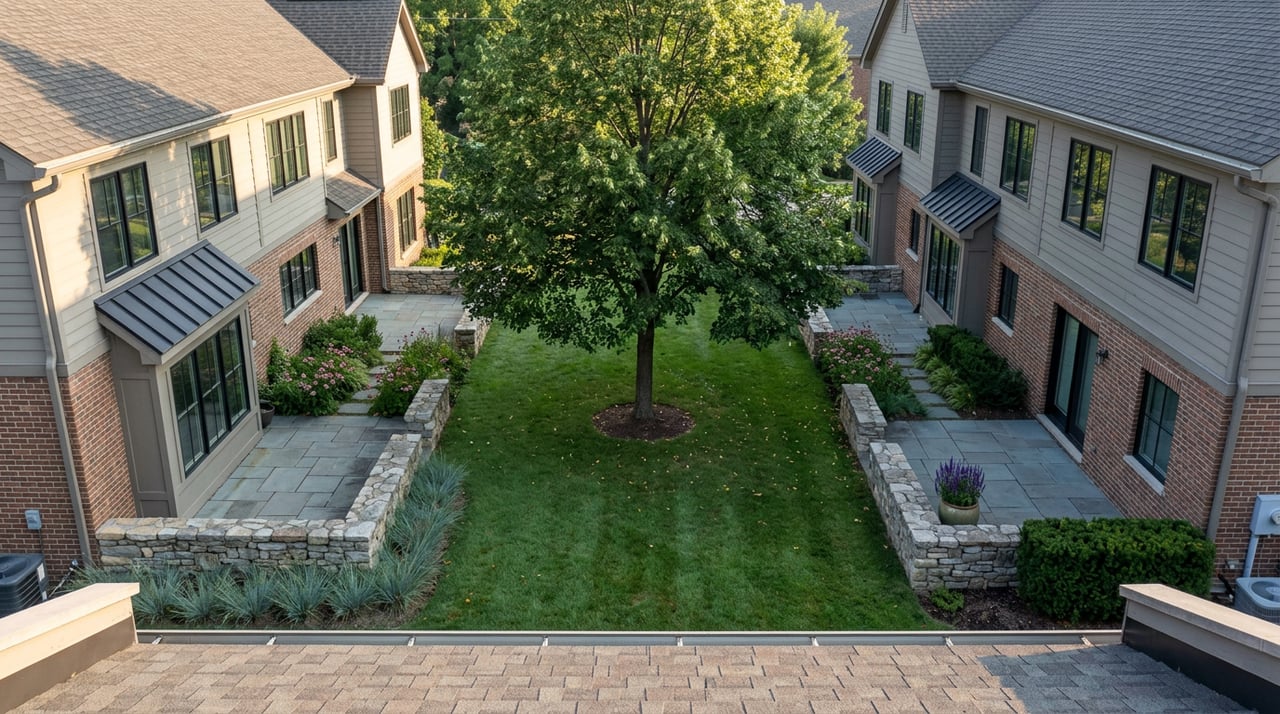
A buyer under contract on a home in Central Park usually hits the same moment during underwriting. The title commitment lists a taxing entity most Denver buyers have never heard of, the Westerly Creek Metropolitan District, and the lender's loan estimate carries a property tax figure noticeably higher than the one quoted for a comparable house three miles away in a different Denver ZIP code. Nothing on the listing flagged it. The comparable sales looked close. The monthly payment doesn't.
That gap isn't a pricing error. It's a structural feature of how Central Park was built, and understanding it changes how you should compare this neighborhood to anywhere else in Denver.
Same List Price, Different Bill
Property tax data compiled by Ownwell shows how far apart two Denver ZIP codes can land on the same city's tax roll. Central Park's ZIP, 80238, carries a median effective property tax rate of 0.91 percent. Homeowners in ZIP 80247, a short drive away, pay a median effective rate of 0.41 percent. That's a 0.50 percentage point spread inside one city, and Ownwell's data shows it translating into a real dollar range, with annual tax bills across Denver running anywhere from roughly $965 to $7,295 depending on ZIP code.
For context, Denver County as a whole carries a median effective property tax rate of 0.48 percent and a median annual bill of $3,071, according to SmartAsset's Colorado property tax data, on a median home value of $636,400. Central Park's effective rate runs roughly double the countywide median. The difference isn't a different city government or a heavier school levy. It's a special district that exists in Central Park and nowhere else in Denver, one that shows up on the title work as WCMD.
Why the Levy Keeps Its Shape
WCMD was created to pay for the infrastructure that turned the old Stapleton airport site into a functioning neighborhood: streets, alleys, pocket parks, and the pool and playground network residents use today. According to Park Creek Metropolitan District's own long-term finance plan, filed in December 2024, the district's certified mill levy is technically fixed at 50 mills, with 48.5 mills dedicated to bond repayment and 1.5 mills to administration. But that number floats. When the state changes how residential property gets assessed, which Colorado has done more than once in recent years, the district recalibrates its levy upward so it keeps collecting the dollar amount its bond payments require. That's why the same finance plan lists the actual 2024 levy at 66.852 mills rather than the base 50, split between 64.846 mills for debt service and 2.006 mills for administration.
By the 2026 tax year, figures tracking recent Central Park closings put the certified levy closer to 68.5 mills. The number keeps climbing not because the district is spending more, but because the levy is designed to hold its value against the kind of statewide assessment changes that would otherwise erode a fixed rate. A buyer comparing a Central Park home to one in an older Denver neighborhood without a metro district isn't only paying for a different set of amenities. They're opting into a financing structure engineered to protect itself against exactly the tax law shifts a homeowner might otherwise hope would bring relief.
The scale of what that levy backs isn't small. As of the district's 2023 audit, roughly $675.9 million in bonds remained outstanding.
When Does It Actually Go Away
Ninety-seven percent of the levy is earmarked for debt repayment rather than ongoing operations, which means most of what Central Park owners pay above the Denver median should disappear once the bonds are retired. The timeline is where the district's own documents pull in two directions.
Westerly Creek's public-facing site currently estimates that the bulk of the mill levy becomes unnecessary once Park Creek's bonds are retired, a milestone it places around December 2051. The December 2024 finance plan sketches a more optimistic path: if the district executes specific refinancing moves, including an estimated $15 million in savings through a 2025 refunding and an early payoff of 2016-series debt that could cut total debt by roughly $30 million in 2026, the full balance could be retired by 2034.
Neither date is a guarantee. One is a target contingent on refinancing steps the district hasn't fully executed. The other is the standing long-run estimate the district still publishes to residents. For anyone buying today, the sound planning assumption is that the added levy is a feature of ownership for the length of a typical mortgage, not a line item likely to disappear in the next few years.
What's Layered on Top
The mill levy isn't the only Central Park-specific cost. The neighborhood's Master Community Association charges most for-sale residential homes $58 per month as of January 2026, funding community programming and shared amenities including parks, pools, and neighborhood events. Many condos, townhomes, and some single-family homes also carry a sub-HOA specific to their building or block, ranging from around $56 per month for some detached homes to $300 to $400 or more per month for townhomes where the fee also covers exterior maintenance, insurance, and shared utilities.
None of these costs show up in a home's list price. All of them show up in the monthly payment.
| Cost layer | What it covers | Recent figure |
|---|---|---|
| Denver County baseline | County-wide effective property tax rate | 0.48% median |
| Central Park, ZIP 80238 | Effective property tax rate including WCMD | 0.91% median |
| Westerly Creek Metro District | Debt service and operations mill levy | 66.852 mills (2024 adjusted figure); near 68.5 mills by 2026 |
| Master Community Association | Flat monthly assessment | $58/month, most for-sale homes, effective Jan. 2026 |
| Sub-HOA (varies by property) | Building or block-specific dues | $56 to $400+/month |
What This Means When You're Comparing Neighborhoods
Central Park's median sale price moved noticeably within 2026 itself. A January 2026 snapshot put the neighborhood's median sale price near $685,000. In the 30 days ending in late April 2026, one ZIP-level tracker showed the 80238 median sale price at $800,000, with homes going under contract in a median of just 4 days and 40 percent of sales closing above list price. Two snapshots of the same neighborhood, four months apart, moved by more than $100,000. That kind of swing matters more here than in most Denver neighborhoods, because the fixed monthly cost of the levy and MCA assessment stays roughly constant no matter which snapshot you're pricing against.
Zoom out to Denver overall and the contrast sharpens. Over the three months ending May 2026, the citywide median sale price sat at $635,000, with homes selling in around 18 days. Central Park was pricing higher and moving faster than the city median through the same stretch, despite carrying a tax and assessment structure no other Denver neighborhood has. Buyers aren't overlooking the added cost. They're pricing it in and buying anyway, largely because the levy funds things they can see and use every week: the trail network through Bluff Lake Nature Center, the shops at 29th Avenue Town Center and Conservatory Green, and the walk to Central Park Station on the A Line.
That's the comparison worth making before you write an offer here or anywhere else close to downtown. A $30,000 to $50,000 gap in list price between two neighborhoods can look larger or smaller than it really is once you annualize the tax and assessment difference over a normal holding period. The sticker price is a starting point. The mill levy, the MCA line, and any sub-HOA are what actually show up on your bank statement every month.
A Few Questions Worth Asking Before You Write an Offer
- Ask your title company or lender to confirm which taxing districts apply to the specific parcel, since older sections of Central Park can carry different sub-district history than newer blocks.
- Request the current WCMD mill levy certification and the current MCA assessment schedule rather than relying on a listing agent's estimate.
- If the home carries a sub-HOA, get the current fee and what it covers in writing before your inspection contingency expires.
FAQ
Does every home in Central Park pay the same WCMD mill levy? The rate applies uniformly across the district, but your actual bill still depends on your home's assessed value, so two homes under the same levy can owe different dollar amounts.
Will refinancing ever make this levy disappear early? It's possible but not guaranteed. Park Creek's finance plan describes a 2034 payoff path that depends on specific refunding and early debt retirement steps. Absent those steps, the district's published estimate for full debt retirement remains around 2051.
Does this affect resale value? Central Park's 2026 sale price and days-on-market figures suggest buyers continue to compete for homes here despite the added monthly cost, and the levy funds infrastructure and amenities that appear to factor into that same demand.
If you're weighing a home in Central Park against another close-in Denver neighborhood, the total monthly cost is worth running before you tour, not after you're under contract. Horizon Home Group can walk through the current WCMD levy, MCA assessment, and any sub-HOA tied to a specific property, and help you compare it honestly against homes outside the district. Let's connect and build your real estate strategy.