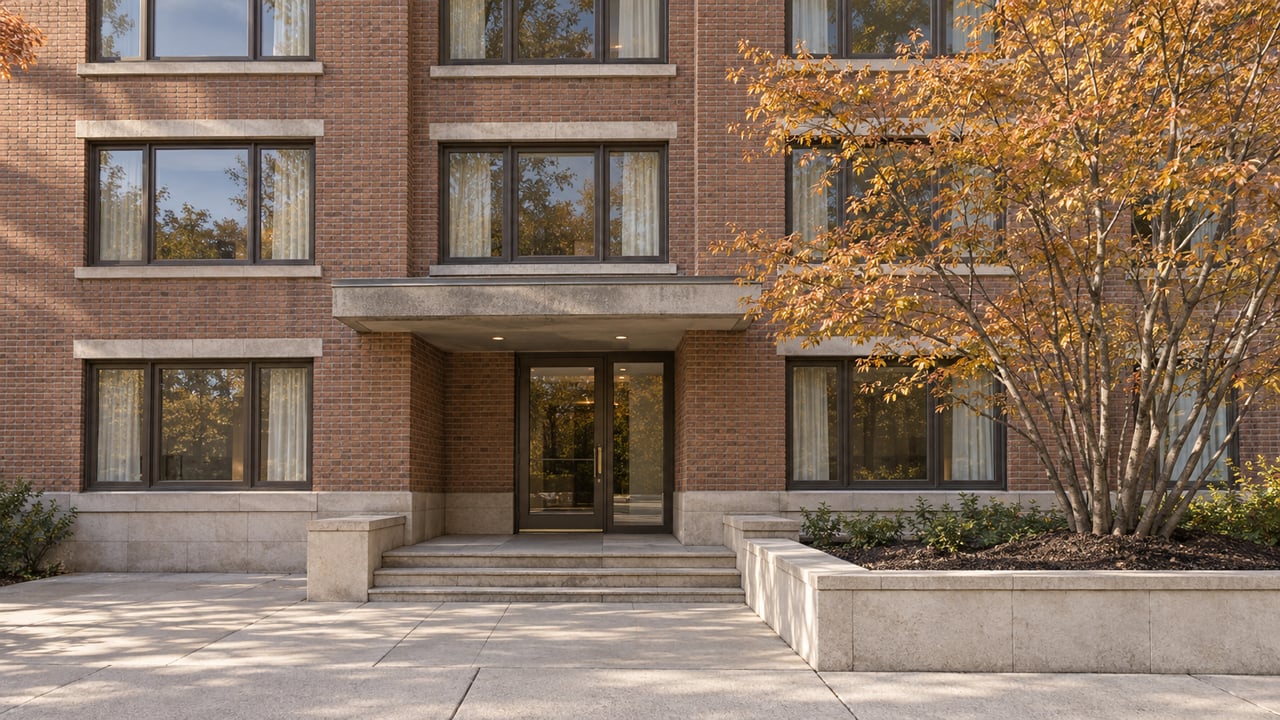
Any Denver condo building of 25,000 square feet or more falls under Energize Denver, the city's building performance ordinance. The rules make the homeowners association, not the unit owner, the party responsible for benchmarking energy use and meeting the targets. Any cost of meeting those targets runs through the association's budget, reserves and dues. In Capitol Hill, many condos sit in older mid-rise and high-rise buildings, so this cost usually shows up in the HOA documents, not on the listing.
How much flexibility a given association has depends on the building's square footage and on whether its units share a central hot-water or heating system, two facts a listing description rarely mentions.
Square footage and the shared boiler decide the options
Denver's September 1, 2026 technical guidance gives residential condominiums their own compliance options. Eligible associations can choose either of two relief paths. One is a final target capped at a 15% energy reduction from the building's baseline. The other is a one-time package of efficiency work estimated to save 15%.
Eligibility is narrow. Condo buildings between 25,000 and 49,999 square feet qualify if their latest benchmarking submission is in compliance. Buildings of 50,000 square feet or more qualify only if every unit has its own domestic hot water system and its own heating and cooling system.
Large condo buildings that share central systems face a stricter standard. The guidance says they are "subject to the State's building performance standards in addition to Energize Denver." When the guidance was published, the state's multifamily target was 42.1 EUI, compared with Denver's 44.2. The city kept these buildings out of the two relief paths to protect Denver's deemed-compliance status with the state. EUI, or site energy use intensity, measures a building's yearly energy use per square foot, so a lower target is harder to hit.
| Building profile | 15% target adjustment | One-time prescriptive path | Timeline extension |
|---|---|---|---|
| 25,000 to 49,999 sq. ft., in benchmarking compliance | Available | Available | Available |
| 50,000+ sq. ft., each unit has its own hot water and HVAC | Available, with mechanical documentation | Available, with mechanical documentation | Available |
| 50,000+ sq. ft., shared central hot water or heat | Not available | Not available | Available |
Two units with similar finishes, views and asking prices can belong to associations in very different positions. A smaller building can lock in a modest 15% goal. A large central-boiler building has to meet the full target, with the state standard layered on top.
Why a replacement boiler may not count
The prescriptive path has a catch for older buildings. Accepted measures include envelope upgrades like insulation and window replacements, a building automation system, retro-commissioning expected to save more than 5%, and cold-climate heat pumps. A like-for-like gas boiler replacement does not count on this path, even if the new boiler is more efficient than the old one. The guidance does allow that kind of replacement under the target-adjustment option.
For an association with an aging boiler and a reserve study that budgets a straight replacement, the path it picks shapes the size of the project. Once an association finishes the prescriptive work and documents it, that work replaces the ongoing performance requirement. Annual benchmarking continues either way. The target adjustment works differently. The building has to hit its adjusted number and then keep hitting it indefinitely.
The city's Energize Denver page says compliance is not a blanket mandate to electrify or to replace equipment before the end of its useful life. Targets can be met through building operations, efficiency measures or renewable energy. Still, the menu of options gets shorter as a building gets larger and its systems more centralized.
One Capitol Hill building shows the scale of numbers involved, though it is an apartment building, not a condo. The Denver Post reported on October 2, 2026 that property manager Cornerstone estimated the Belmont Buckingham will need $540,000 in new boilers and more than $1 million in total upgrades. Cornerstone also put the 1300 Apartments in Congress Park at $440,000. These are estimates filed in a lawsuit over both city and state rules. They are not completed costs, and the reporting doesn't separate out the Energize Denver share.
The clock moved, and the penalties shrank
Denver's legal rules, effective August 27, 2026, still list performance years of 2025, 2027 and 2030. The current guidance says most buildings received an extension. The typical schedule is now a 2028 interim target and a 2032 final target, with reports due June 1, 2029 and June 1, 2033. Some buildings remain on the original schedule.
The city also cut performance penalties in half, and it won't levy them until late 2029, based on compliance. The current schedule works like this:
- Benchmarking: missing or inaccurate annual reports, or skipped third-party verification, can bring a $2,000 civil penalty per violation each year.
- Missed targets: up to $0.15 per kBtu for each missed target on a three-period schedule, $0.23 on a two-period schedule, and $0.35 on a one-period schedule.
- Missing target-year report: failing to submit an approved report for the target year can bring up to $5 per square foot.
Enforcement begins with a Notice of Violation and a 90-day cure period, during which an owner can come into compliance or apply for an alternate option or corrective plan.
The challenge to the rules is also still open. The same Denver Post report says a federal judge dismissed the landlord groups' challenge to the appliance rules but let their case against the building-wide emission standards go forward. The city's own figures, released alongside that ruling in October 2026, say 47% of large buildings already meet their 2032 targets, up from 35% the year before and 15% in 2022. They also say 69% currently meet the standards required for 2028. Many buildings, in other words, face little or no gap to close.
Where reserves meet a city energy rule
Every covered condo building can apply for a timeline extension, whatever its size or mechanical setup. The grounds the city lists are revealing. An association qualifies when its capital reserves are below 30% of what its reserve study says the identified work needs. It also qualifies when it needs "extra time" to raise money for efficiency projects or major equipment "through dues or special assessments." An association that applies because of low reserves has to file a fundraising plan showing how much money it needs, how it will collect it, and on what timeline.
An extension, then, can mean the association has more time to collect. It doesn't mean the cost goes away. We found no local news report of a named Denver condo association that has raised dues or levied a special assessment because of Energize Denver. The city's framework does name dues increases and special assessments as the expected ways to pay.
Colorado also has no general requirement for existing associations to commission reserve studies, according to the Colorado Division of Real Estate. HB26-1099, effective August 12, 2026, requires a 30-year reserve study only from developers of new communities before they hand control to the owners. An older Capitol Hill association may have a current study, an outdated one or none at all, and that changes how much weight its reserve balance can carry.
Reading a building before the document deadline
Two public tools and one contract clause let a buyer check a building's status.
- The city's Performance Lookup Tool. Search by address to see the building's size, benchmarking status, current site EUI, and verification and performance status. The tool also shows whether the city has approved a target adjustment, an electrification credit or a timeline extension, plus a schedule of target EUIs and target years. The size figure tells you which side of the 50,000-square-foot line the building falls on. The gap between current EUI and the final target shows how far it has to go.
- The public Energize Denver map. It labels buildings as In Compliance, Not Submitted or Exempt.
- The Association Documents. Under the Colorado Real Estate Commission's residential purchase contract, mandatory since January 1, 2026, the seller provides the association's documents by a deadline set in the contract. These include the operating budget, prior-year financial statements with reserve amounts, a list of regular and special assessments, owner and board minutes, and a reserve study "if any." The contract gives the buyer a termination right tied to those documents.
The assessment list reflects the association's last annual disclosure. A project the board is still discussing is more likely to show up in the minutes. The lookup tool doesn't show whether the building runs on a central boiler. That detail usually turns up in the reserve study, the minutes or the property inspection.
A few questions we hear
Does Energize Denver apply to my individual unit?
The ordinance applies to the building. For a residential condo or co-op, the rules name the association as the responsible owner.
Can I see a building's HOA documents before I make an offer?
The Colorado Division of Real Estate says there is no statewide central repository for HOA documents. A buyer is not entitled to the contract's association documents until after signing the purchase contract. Buyers can still ask the listing side for documents earlier.
Does a 2032 deadline mean nothing happens until then?
For most buildings, the next evaluation covers calendar year 2028, with the report due June 1, 2029. Annual benchmarking reports remain due every June 1 in between, so a building's lookup record keeps updating ahead of its target years.
If you're weighing a Capitol Hill condo and want help reading a building's Energize Denver schedule next to its reserve study and minutes before your document deadline, Horizon Home Group can walk through it with you during a strategy session. Let's connect and build your real estate strategy.
This article is general information, not legal, tax or financial advice. Consult a qualified professional about your situation.