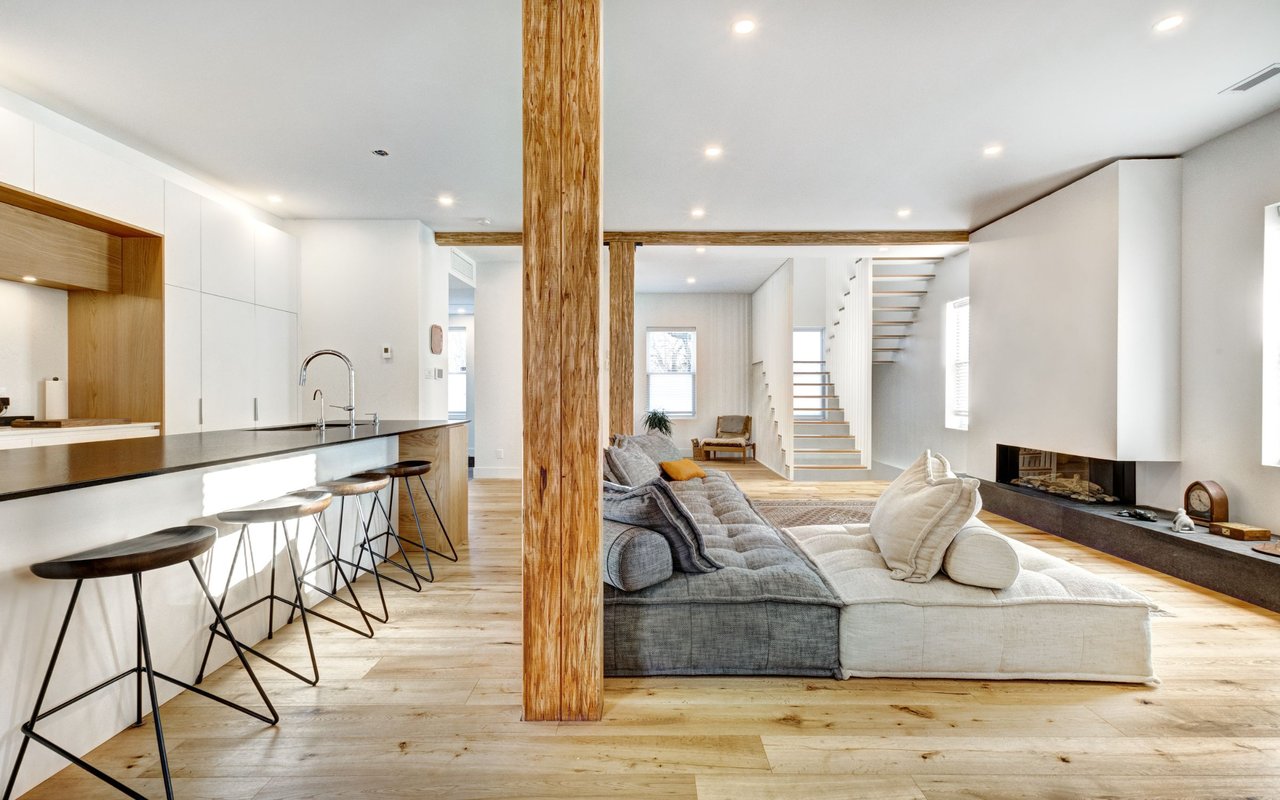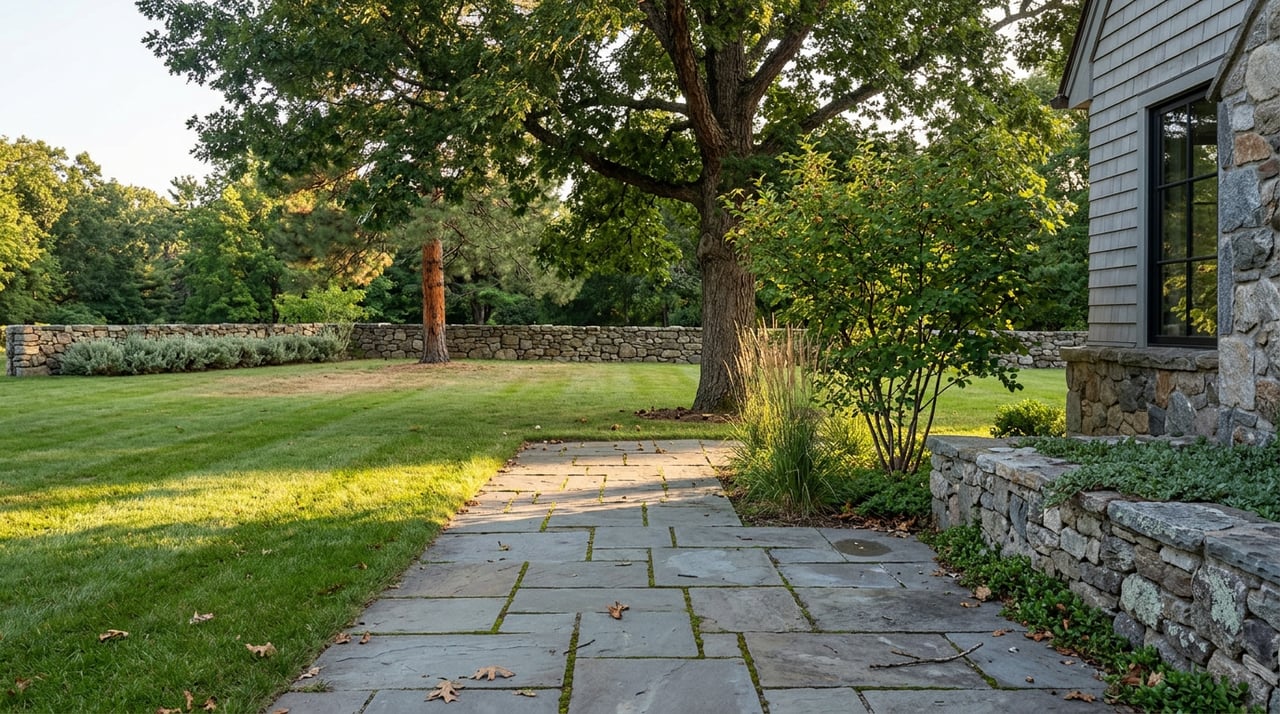
Drive through most Denver suburbs and you know when you've arrived. A gateway sign. A cluster of shops. A crosswalk button you actually have to push. Cherry Hills Village skips all of it. There's no commercial strip to signal you've crossed the line, no cafe row, no welcome arch on Quincy or University. You just notice the noise drop and the lots get bigger.
That absence isn't an accident of zoning inertia. It's a decision the village made in 1945, when it incorporated specifically to keep commercial development out and residential character intact. More than eighty years later, that founding choice is still shaping where the money goes, where the businesses open, and where residents actually gather. In 2026, all three of those things are converging on the same 30-plus miles of trail that thread through the village, which means the canal isn't just scenery here. It's doing the job a downtown would do anywhere else.
A City That Never Built a Downtown
The rule is still on the books, in practice if not in a single ordinance line item you can point to: no commercial development inside Cherry Hills Village. Not a corner market, not a coffee counter, not a dry cleaner. Everything a resident needs commercially sits just outside the boundary: Cherry Creek North, the Denver Tech Center, or Littleton.
That's not a complaint from residents. It's the trade they made for 30-plus miles of trail and 47 acres of parkland inside a city of just over 6,400 people, a ratio of open space to population that most Front Range suburbs can't match because most Front Range suburbs spent that land on retail instead. If you want to understand what's actually new in the village this year, you have to stop looking for storefronts and start looking at the canal and its edges, because that's where the capital and the community life both landed.
Where the City's Money Is Actually Going This Year
The High Line Canal Conservancy tracks capital projects along the full 71-mile trail, and the Cherry Hills Village section has two live ones this year worth knowing about if you walk, ride, or drive near them:
- Yale Avenue crossings. The canal crosses Yale four times, more than any other roadway on the entire trail. Two of those crossings are getting Rectangular Rapid Flashing Beacons and ADA upgrades, with installation targeted for summer 2026.
- Mile 33 irrigation and tree planting. The village has been running a permanent irrigation line along the canal to support newly planted trees, and in 2026 that line extends north of Belleview Avenue with additional planting, a partnership between the city and the Conservancy.
Neither project is dramatic. Neither one would make sense in a town with a Main Street to fund instead. But in a village with no sales tax base to speak of from retail, this is what infrastructure spending looks like: safety improvements at pedestrian crossings and tree canopy for a corridor that functions as the only shared public space most residents use daily.
Quincy Farm Is Standing In for the Town Square
If the canal is the street, Quincy Farm is the plaza. The 17.5-acre property straddles both banks of the canal near Quincy Avenue, and it's the closest thing the village has to a civic gathering point. The land was donated to the city in 2015 by Catherine "Cat" Anderson, who placed it under a conservation easement before her death, and it includes the only 19th-century farmhouse remaining in the area alongside a 1934 barn.
That barn just went through a full renovation, completed in 2025, and the Cherry Hills Land Preserve marked the reopening with the kind of programming you'd expect from a town center rather than a farm: workshops, speaker series, a kids' art show, live raptor demonstrations. This year's marquee event, the 2026 Barn Party, is set for Friday, September 18, about six weeks out from today. The farm's full 2025 season, including the first Barn Party, drew more than 1,600 visitors to its programs overall, a meaningful number for a nonprofit running events out of a converted barn with no formal parking lot.
There's a practical wrinkle worth knowing if you're planning to attend anything at Quincy Farm this fall: on-site parking tops out around ten vehicles, and the site has no lighting for evening events. That limitation is exactly why the city's own Arts Commission, according to meeting notes from November 2025, chose to hold its larger fundraiser elsewhere rather than compete for the same small lot.
The Boundary Line Business
If you can't build inside the village, you build on its edge. That's exactly what Lavender Coffee Boutique did in February 2026, when it opened its second Denver-area location at 1400 East Hampden Avenue, sitting right on the northern boundary where Cherry Hills, Greenwood Village, and the Tech Center all meet. It's not a coincidence of address. It's the only way to serve this specific population of morning runners and dog walkers without violating the zoning logic that's kept the village commercial-free since 1945.
The people who opened it noticed the same thing this post is arguing: "There's no main street, no commercial district, no welcome arch." That's not a design flaw from their perspective. It's the reason a 6:30 a.m. opening time makes sense here, because the crowd they're catching is already out on the canal before anyone else in Denver is awake.
What This Means for Your Next Walk
If you're looking for a specific stretch to test all of this, Segment 13 of the High Line Canal starts near Belleview Avenue in Greenwood Village and ends at Three Pond Park in Cherry Hills Village, a 2.9-mile point-to-point route that passes through Blackmer Common on a crusher-fine gravel surface. It's flat, it's easy, and it's shared. Equestrians use this segment regularly, so it's worth building that into your expectations if you're walking a dog or riding a bike through it.
A few miles further along the same corridor sits the Marjorie Perry Nature Preserve, 59 acres of grassland and wetland habitat with views toward the mountains and reliable birdwatching, herons and ducks most mornings, occasionally something rarer. None of this required a downtown to exist. All of it required the village to decide, decades ago, that trails and open space were the infrastructure worth building instead.
That's the actual story of Cherry Hills Village in 2026. Not a new restaurant, not a new development. A city that chose its canal over a commercial district in 1945 and is still funding that choice today, one crosswalk beacon and one barn renovation at a time.
Whether you've lived here for years or you're weighing what a move to this part of the Denver area actually looks like day to day, understanding how a place invests in itself tells you more than any listing photo can. If you're thinking about your next move in Cherry Hills Village or anywhere else in the Denver area, Horizon Home Group can walk you through what the market and the neighborhood actually look like right now. Let's connect and build your real estate strategy.